Data requirements in transfer pricing
Comparable-company studies depend on a documented search strategy, consistently applied screening criteria, clear rejection reasons, and financial information that can be traced to its source. The same need for transparent data applies to credit-rating analysis and the pricing of intragroup financial transactions.
At the congress, smartZebra will discuss how structured data and reproducible workflows can support transfer pricing analysis. The platform provides financial information for listed and private companies, industry classifications, screening criteria, profitability indicators, source references, and calculations of interquartile ranges and medians.
Topics for discussion
Transfer pricing documentation lives or dies on its comparables. A benchmarking study is only as defensible as the search strategy behind it, the rejection reasons recorded for each candidate, and the traceability of every financial figure back to a filed annual report.
Luxembourg makes this harder than average. Intragroup financing, holding structures, fund vehicles and cross-border services all need arm's length evidence, and the tax administration is looking at transfer pricing more closely than it used to. Preparation in advance is increasingly the difference between a smooth review and a long one.
smartZebra provides a Credit Rating Tool and data: Credit Spreads and Interest Rates, standardized financials for over 50,000 listed and 500,000 private companies, SIC and NACE classification, quantitative screens, and automatic calculation of the interquartile range and median, with a source link on every data point. If you are at the congress, we would be glad to discuss with you:
- Credit ratings and cost of debt – synthetic ratings and peer benchmarking where no external rating exists
- Comparables screening – independence, loss-making years, R&D intensity, turnover thresholds and region filters
- Financial transactions under OECD Chapter X – credit spreads by rating and term, from 1 to 30 years, for intragroup loan pricing
- TNMM benchmarking studies – from search strategy to a documented arm's length range
- Profit Level Indicators – operating margin, net cost plus, Berry ratio, return on assets, ROCE and gross margin, tested side by side
- Local file and master file support – benchmark exports that drop straight into the documentation appendix
- APAs and audit defense – reproducing a study years later with the same inputs and the same result
Event information
The LTPA's working groups have been producing substantive output on documentation frequency and on credit rating analysis across investment, real estate, aviation and other financing-heavy sectors. Those are exactly the areas where the gap between a plausible number and a defensible one is widest. Congresses like this one are where that gap gets discussed openly, between the people who prepare the analysis and the people who review it. For a data provider, that is the most useful room to be in.
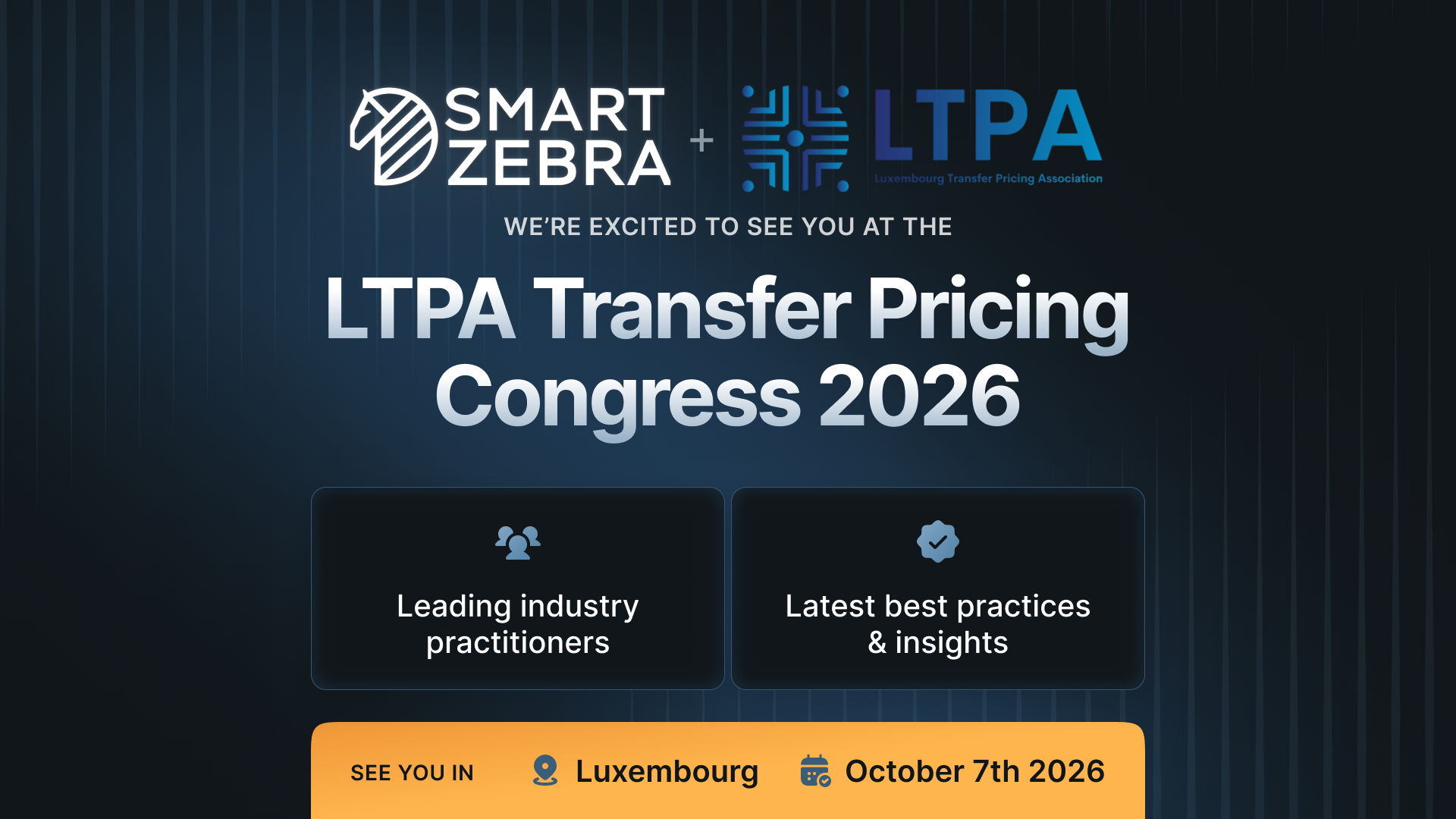
The LTPA Transfer Pricing Congress takes place at BGL BNP Paribas in Luxembourg on 7 October 2026. The official programme and registration information are available from the Luxembourg Transfer Pricing Association.
Participants can arrange a meeting with smartZebra to discuss comparable-company searches, financial transactions, credit ratings, or documentation workflows.
Try smartZebra beforehand
✅ Start your free trial with smartZebra, and determine cost of capital, beta factors and multiples in minutes – no credit card needed, and the access expires automatically.
More know-how on specific modules & solutions: Transfer Pricing · Cost of Capital · Beta Factors · Multiples · Interest Rates